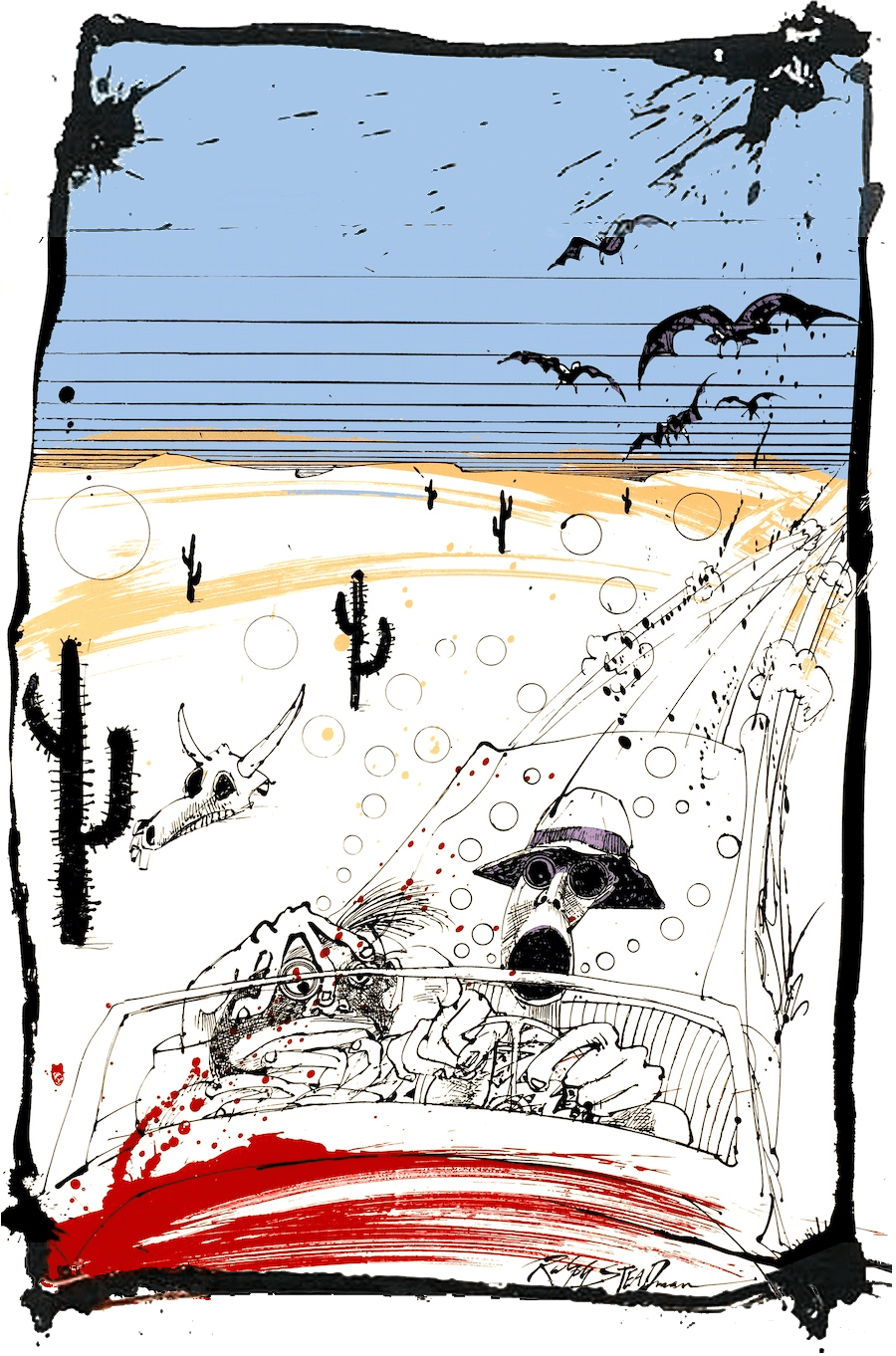

“Gonzo journalism” is a style of journalism that blurs distinctions between writer and subject, fact and fiction. It’s characterized by a highly subjective approach, where the journalist is often a central figure in their narratives, displaying personal experiences and emotions. This style contrasts sharply with traditional journalism, which emphasizes objectivity and detachment from the subject matter.
Etymology:
The term “Gonzo” was coined to describe this style of writing by Hunter S. Thompson, who popularized the form. It was first used by Bill Cardoso, editor of the Boston Globe, in 1970. Cardoso used “Gonzo” to describe Thompson’s article “The Kentucky Derby is Decadent and Depraved,” which was published in Scanlan’s Monthly. The term is derived from a French Canadian word meaning “shiny,” but in Boston Irish slang, it came to mean “last man standing.” Over time, Gonzo has come to denote something wild, bizarre, or absurd.
Below is an exquisite example of of this style:
“Like most others, I was a seeker, a mover, a malcontent, and at times a stupid hell-raiser. I was never idle long enough to do much thinking, but I felt somehow that some of us were making real progress, that we had taken an honest road, and that the best of us would inevitably make it over the top. At the same time, I shared a dark suspicion that the life we were leading was a lost cause, that we were all actors, kidding ourselves along on a senseless odyssey. It was the tension between these two poles — a restless idealism on one hand and a sense of impending doom on the other — that kept me going.”
― Hunter S. Thompson, The Rum Diary
I personally regard H.S. Thompson as one of the most skilled, vibrant, and powerful writers ever, partly exemplified by the above introduction to his book, “The Rum Diary,” which he wrote when he was just 22 years old. It’s impressive how he managed to embody these insights and attitudes about life, the world, and his place in it, along with the confidence that accompanies such awareness, at such a young age. I love his writings, as they place him among the great ones.
Examples of Gonzo Journalism:
Hunter S. Thompson:
“Fear and Loathing in Las Vegas” – Perhaps the quintessential example of Gonzo journalism, this book details the author’s journey to Las Vegas with his attorney to cover a motorcycle race and convention for a magazine. The narrative dives into drug-fueled distortions, questioning the American Dream and the failures of the 1960s countercultural movement.
“Hell’s Angels: The Strange and Terrible Saga of the Outlaw Motorcycle Gangs” – This book involved Thompson spending a year living with the Hell’s Angels motorcycle gang, experiencing and documenting their lifestyle firsthand.
George Plimpton:
“Paper Lion” – While not typically categorized strictly under Gonzo journalism, Plimpton’s participatory approach shares similarities. He writes about his experiences training and playing with the Detroit Lions of the NFL, immersing himself in the role of a quarterback.
Gonzo journalism typically features first-person narrations, vivid descriptions, and a blend of factual and fictional content. It has influenced many writers and journalists who seek to convey deeper truths through personal stories and flamboyant techniques, rather than just presenting objective facts.
In the spirit of discovery, The Alchemist