
the_content()
“Do not conform to the pattern of this world, but be transformed by the renewing of your mind.”
— Romans 12:1-2
Analysis:
The phrase “chain of reasoning” refers to a logical and sequential series of thoughts or arguments that lead from a premise to a conclusion. It is like a link of ideas, where each link (or step) in the chain connects logically to the next, forming a cohesive argument or rationale. This concept is often used in critical thinking, debate, philosophy, and scientific inquiry to ensure that arguments are structured, coherent, and logically sound.
Here’s how a chain of reasoning typically works:
Starting point (Premise): The chain begins with one or more premises, which are statements or facts assumed to be true for the purpose of the argument.
Logical progression: From the initial premise(s), subsequent steps are derived through logical reasoning. Each step should naturally and logically follow from the previous one, ensuring that the “chain” remains unbroken and coherent.
Links in the chain: Each link in the chain represents a step in reasoning, which may involve deductions, inferences, or conclusions drawn from the preceding steps.
Ending point (Conclusion): The final link in the chain is the conclusion, which should be the logical result of all the preceding steps in the chain. The strength of the conclusion depends on the integrity of the entire chain; if any step is weak or illogical, the conclusion may be flawed.
A well-constructed chain of reasoning is crucial for persuasive arguments, problem-solving, and decision-making, as it ensures that conclusions are not only supported by evidence but also arrived at through a clear and logical process.
The Bible, while not a formal textbook on logic, contains a lot of passages that demonstrate or call for logical reasoning, critical thinking, and the pursuit of wisdom and understanding. While it may not directly reference a “chain of reasoning” in the technical sense, the words of Christ’s always imply the use of higher rational thought, metaphorically translated into reasoned arguments.
In Proverbs 1:2-7 it says:
“for gaining wisdom and instruction; for understanding words of insight; for receiving instruction in prudent behavior, doing what is right and just and fair; for giving prudence to those who are simple, knowledge and discretion to the young—let the wise listen and add to their learning, and let the discerning get guidance—for understanding proverbs and parables, the sayings and riddles of the wise. Honoring the Lord is the beginning of knowledge, but fools despise wisdom and instruction.”
These verses outline a logical progression; the pursuit of wisdom leads to understanding, which in turn leads to prudent behavior and moral rectitude. The foundational starting point here is “honoring the Lord,” from which all knowledge, wisdom and love flow.
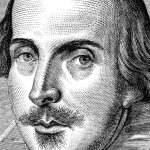
The idea is that our current “chain of reasoning” often is “what chains us” but disregarding our current, limited logical programming, — but by honoring the legends of history, we can elevate our current “chain of reasoning” to the logic of Christ, Goethe, Elon Musk, Shakespeare, Plato, Napoleon, and many other geniuses, —thus “chaining” ourselves to similar outcomes and results as they got.
We should hence ask ourselves the question, “To which ‘chain of reasoning’ do I belong?” because this will ultimately dictate all the outcomes of our lives.
Therefore, Bee Brave, BraveDave ⭐